
QoE-grade reporting: the basics for promoter-led manufacturers
A quality of earnings review tests whether reported profit is real, repeatable and supported by cash. QoE-grade reporting means your own numbers would survive that test: management accounts that reconcile to the audited books, clear treatment of one-off and related-party items, consistent inventory and provisioning policies, and margin you can explain by product and customer.
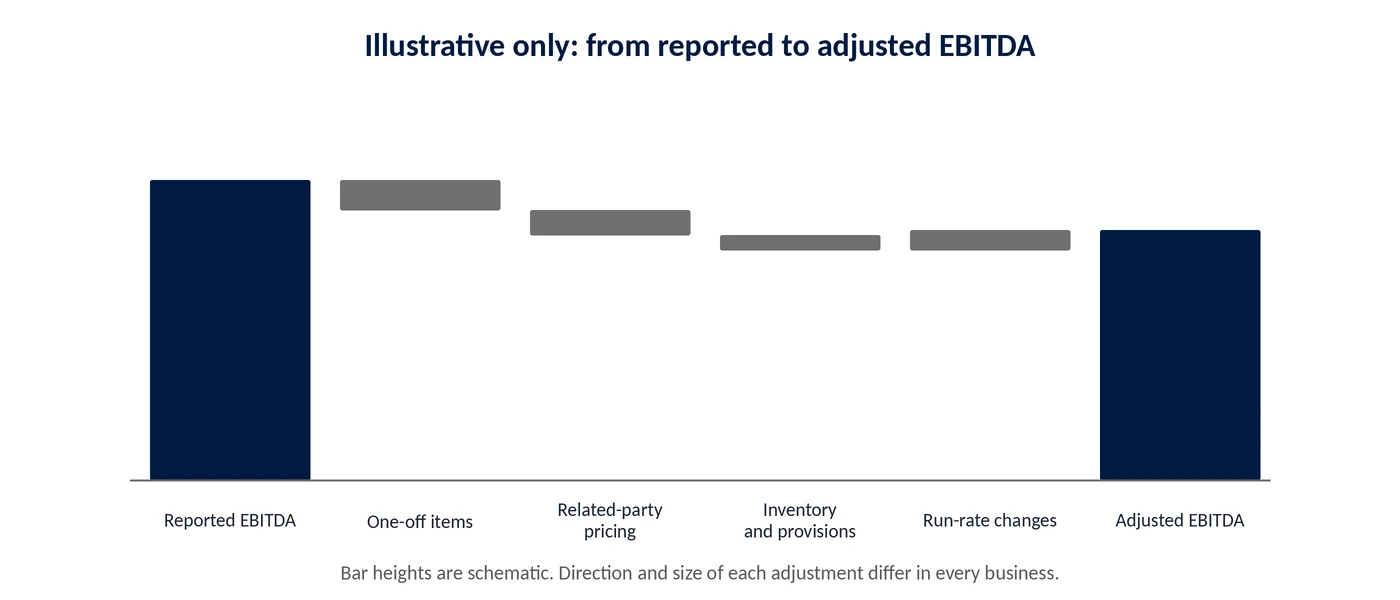
What a quality of earnings review looks at
When an investor or acquirer is serious, it usually commissions an independent accounting firm to review the quality of earnings. The question is simple: what profit does this business really make on a recurring basis? The review typically examines:
- Normalisation: one-off income and costs, such as asset sales, insurance claims or unusual legal costs, separated from recurring earnings.
- Related-party transactions: purchases, sales, rent or salaries involving the promoter family or group companies, and whether they are at arm's length.
- Revenue recognition and cut-off: whether sales are booked in the right period and returns and claims are fully reflected.
- Inventory and provisions: valuation methods, slow-moving stock, and whether provisions for doubtful debts, warranties and obsolescence are adequate and consistent.
- Cash conversion: whether profit turns into cash, and how working capital moves through the year.
- Run-rate: the effect of recent price changes, new contracts or lost customers on forward earnings.
Why promoter-led companies struggle
None of these areas are unusual, but in a promoter-led company they are often handled informally. Group companies trade with each other on terms nobody wrote down. Year-end adjustments are made to the statutory accounts but never flow back into the management numbers. Inventory valuation methods change from year to year without being written down. Each item may have a good explanation; together they make the reported profit hard to trust, and anything hard to trust is discounted.
Making your reporting QoE-grade
- Reconcile management and statutory accounts every month, and explain the differences in writing.
- Document related-party arrangements with terms, rationale and how pricing compares with outside parties.
- Tag one-off items as they happen, with evidence, instead of reconstructing them years later.
- Fix policies for inventory valuation, provisions and revenue recognition, and apply them consistently.
- Build margin by product and customer so changes in profit can be explained, not just reported.
- Keep the evidence: contracts, price lists, credit notes and approvals, filed where an outsider can find them.
Doing this a year or two before any transaction gives you clean comparable periods, which is what a reviewer looks for. It also gives the promoter better numbers to run the business on in the meantime.
Where GOP fits
GOP helps promoter-led manufacturers build the reporting discipline, costing and MIS underneath QoE-grade numbers, as part of Governance & Investment Readiness. The quality of earnings review itself, audit and tax opinions are the work of independent chartered accountants and advisers.
Not legal or financial advice. This article is general information about management reporting. Accounting treatment, audit and tax questions depend on your facts and on applicable standards. Take advice from your statutory auditor and qualified chartered accountants before acting.
Common mistakes
- Keeping one-off and related-party items undocumented until a reviewer asks about them.
- Letting management numbers drift away from the audited accounts during the year.
- Changing inventory or provisioning methods from year to year.
- Starting clean-up only after an investor has issued a term sheet.
A checklist you can use this week
- Reconcile last month's management profit with the books and list every difference.
- Write down every related-party arrangement, with terms and pricing basis.
- Start a register of one-off items, with dates, amounts and evidence.
- Confirm the written policy for inventory valuation and each major provision.
- Check that you can explain last year's change in profit by product and customer.
Frequently asked questions
Is a QoE review the same as an audit?
No. An audit gives an opinion on whether the financial statements follow accounting standards. A quality of earnings review analyses sustainable earnings for a transaction and is usually commissioned by the investor or buyer.
Should we commission our own QoE before a deal?
Some companies do, to find issues first. Whether it is worthwhile depends on the transaction and your advisers' view; good internal reporting is valuable either way.
How far back does a review look?
Typically the last two to three financial years plus the current year to date, though the period depends on the transaction.
Related reading
Talk to GOP
Share where your business is today and where you want it to be. We will tell you honestly whether and how we can help.