
Working with the promoter: how embedded operators deliver
Embedded operators succeed when the promoter stays the owner of the vision and the operator takes ownership of execution. In practice that means a named internal counterpart, open access to data, KPIs agreed before work starts and a fixed weekly review. Where those are in place, results tend to follow.
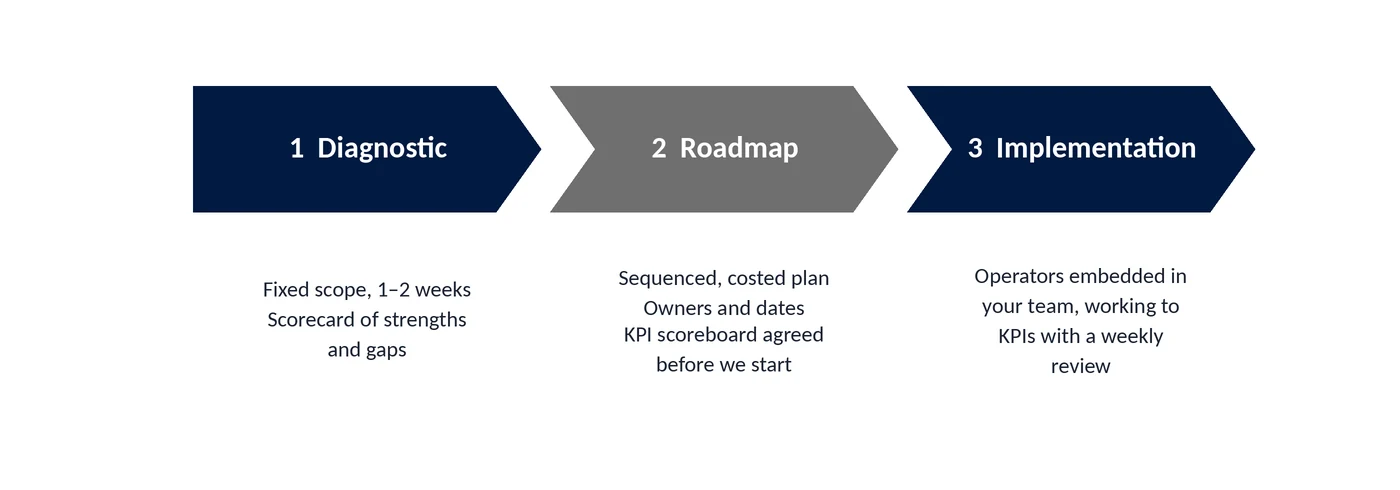
How an engagement runs
- Diagnostic (one to two weeks). Fixed scope, producing a scorecard of strengths and gaps.
- Roadmap. Sequenced, costed actions with owners and a target date for each.
- Implementation. Operators work inside the team against agreed KPIs, with a weekly review.
- Handover. The scoreboard, routines and trained owners remain, so results do not depend on the consultants.
What the promoter does
- Sets the targets and the boundaries.
- Gives access to data and decision-makers.
- Backs the changes publicly.
- Shifts from approving everything to reviewing the scoreboard.
What the operator does
- Takes accountability for named KPIs.
- Works with existing managers and develops them rather than replacing them.
- Reports openly, including when something is off track.
The first 90 days
The first month is about baselines. Operators spend time on the floor and with the sales team, reconcile the numbers the business already reports, and agree with the promoter which three or four KPIs will define success. The second month is about early, visible gains: a changeover cut, a discount approval tightened, a weekly sales review that actually runs. These matter less for their size than for the trust they build with managers. By the third month the weekly scoreboard is routine, owners are named for every metric, and the promoter is reviewing results rather than approving every decision.
How the relationship changes
Early on, the operator leads and the internal counterpart shadows. Over the following quarters the roles swap: the counterpart runs the review and the operator coaches. The engagement is working when the promoter can miss a weekly review without anything slipping.
What decides success
Four factors matter most: promoter commitment, a named internal counterpart, access to data, and patience through the first quarter. Where those are in place, results tend to follow. Where they are missing, the engagement stalls regardless of the quality of the plan.
Learn more on the how we work page.
Common mistakes
- Expecting operators to succeed without promoter backing in front of the team.
- Skipping the named internal counterpart, so decisions queue for the promoter.
- Withholding data until trust is built, which delays the diagnostic.
- Judging the engagement in the first month before baselines are set.
A checklist you can use this week
- Name the internal counterpart and give them time in their calendar.
- Agree the three KPIs that matter most and how often you will review them.
- Decide which approvals you will hand over, and announce it to the team.
- Prepare the data access the diagnostic needs.
- Block a fixed weekly slot for the scoreboard review.
Frequently asked questions
How involved does the promoter need to be?
Involved at the start to set targets and back the changes, then through a regular review. Day-to-day approvals move to the team as the system takes hold.
What if our managers resist?
Resistance usually signals unclear roles or fear of change. Operators start with what works, involve managers in design and show gains early to build trust.
How is success measured?
Against KPIs agreed before the work starts and reviewed weekly on a shared scoreboard.
Related reading
Talk to GOP
Share where your business is today and where you want it to be. We will tell you honestly whether and how we can help.