
How to prepare for an SME IPO
An SME IPO rewards companies that look institutional on listing day and keep delivering afterwards. Preparation is mostly about proving credibility to investors, regulators and the market: consistent audited financials, a compliant board, a costed use of proceeds, MIS that can sustain disclosure, and management depth beyond the promoter. Confirm eligibility with a merchant banker before setting dates.
Check eligibility early
Exchange and SEBI rules for SME platforms change from time to time. Confirm current eligibility criteria, timelines and costs with a merchant banker and legal counsel before setting dates. This article describes preparation, not regulatory requirements.
The preparation areas
- Financials: audited history, clean accounting policies and no unexplained related-party items.
- Governance: a compliant board structure, committees where required and documented policies.
- Growth story: a defensible, evidence-backed plan for how listed capital will be used.
- Systems: MIS and reporting that can sustain periodic disclosure.
- People: a management team beyond the promoter, which investors weigh heavily.
What happens after listing
A listed company faces public disclosure, analyst and investor questions, and periodic results. Weak systems show up quickly. The strongest listings are of companies that were already running as institutions before they filed.
A realistic timeline
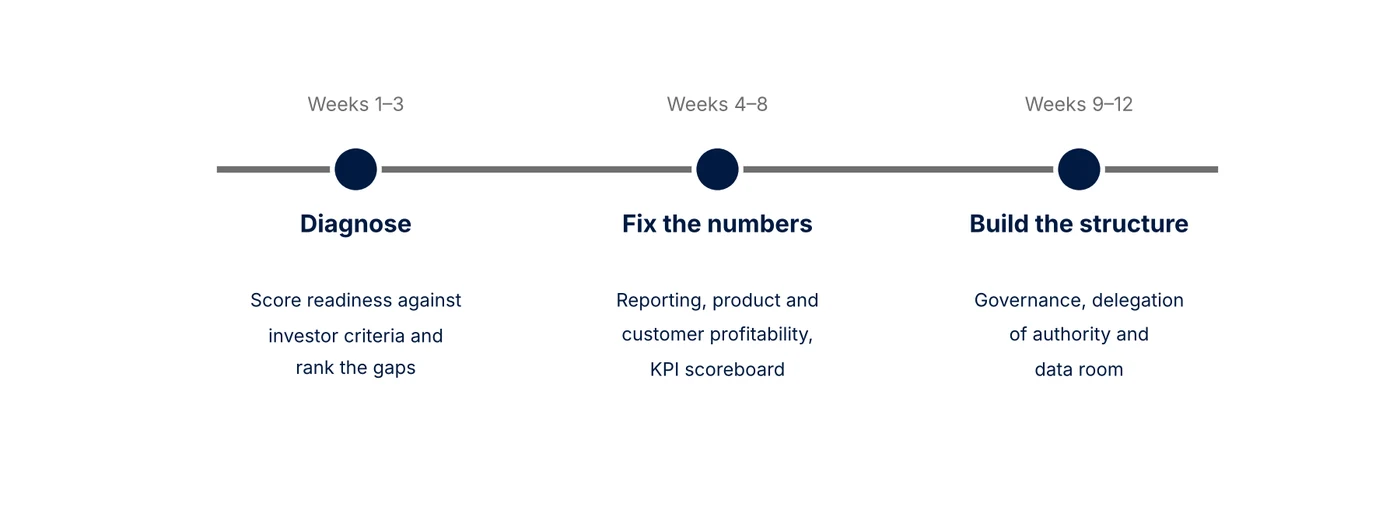
Most companies need many months of preparation before filing, and the range depends on starting condition. Readiness work on reporting, governance and management depth should begin well before bankers are appointed, because these changes take time to show up in the numbers.
Questions to answer before you appoint bankers
- Why list, and why now? Write the answer in two sentences an outside investor would accept.
- Which three numbers will investors watch every quarter, and can you produce them on time today?
- Who besides the promoter will speak for the company to investors and analysts?
- Which related-party arrangements would you be uncomfortable explaining in public, and what will you change?
If these questions are hard to answer, the business is not yet ready to list, whatever the eligibility criteria say. That is useful to know early.
Where GOP fits
GOP helps promoter-led manufacturers prepare the business: reporting discipline, governance, management depth and the growth plan. Legal, regulatory and banking steps are handled by qualified advisers. See Governance & Investment Readiness.
Not legal or financial advice. This article is general information about business preparation. Listing rules, eligibility criteria and costs are set by SEBI and the exchanges and change from time to time. Take advice from a SEBI-registered merchant banker and legal counsel before acting.
Common mistakes
- Starting with bankers and timelines before the company's reporting and governance are ready.
- Underestimating how much management depth beyond the promoter matters to investors.
- Describing the use of proceeds in general terms instead of with a costed plan.
- Assuming disclosure obligations after listing can be handled with existing systems.
A checklist you can use this week
- Ask a merchant banker and legal counsel for current eligibility criteria in writing.
- Review three years of financials for consistency, related-party items and accounting policy changes.
- Draft a one-page use-of-proceeds plan with amounts, owners and expected outcomes.
- Map which leaders would face investors and analysts, and how prepared they are.
- Test whether your MIS could support periodic disclosure without heroic effort.
Frequently asked questions
Is an SME IPO suited to my company?
It depends on size, growth, governance and the use of proceeds. A merchant banker can assess eligibility, and a readiness diagnostic shows where the business stands today.
What does listing cost?
Costs depend on issue size, advisers and exchange. Obtain written estimates from merchant bankers and legal advisers rather than relying on general figures.
Can we raise private equity first and list later?
Many companies do. Investment can strengthen governance and systems before a listing, but the sequence depends on your goals and the terms agreed.
Related reading
Talk to GOP
Share where your business is today and where you want it to be. We will tell you honestly whether and how we can help.